Friday, March 18, 2016

This is Australia

We're proud to be Montanans, Alabamans, and Virginians. We see the uniqueness in our towns and states and thrive on telling others about what makes us individuals. Who hasn't been cornered by one or other of a town's inhabitants and told the most interesting, horrifying, hilarious details about the area? Who hasn't heard about Fred who has lived in this town his entire life and driven his riding lawn mower to coffee every morning at precisely 7:00? Who hasn't learned all about Cody, the best basketball player on the team this year, and man if he can keep his grades up, it's lookin' like a State title!?

In many ways, Australia is the same. Replace basketball with rugby. Fred can remain Fred. But fundamentally, Oz is a different world, a landlocked island, massive in size and replete with its own culture. I'm not claiming to know and understand the culture in this country perfectly, but I thought it might be entertaining to record what I've noticed. So, in my incomplete opinion, this is Australia:

1.) "Aussie! Aussie! Aussie!!! Oi! Oi! Oi!!!" Australians LOVE sports so much they have created a chant that everyone knows and uses religiously. I defy you to find an Australian that won't yell, "Oi! Oi! Oi!" in response to your, "Aussie! Aussie! Aussie!" They love cricket and rugby the most, but being the equitable folks that they are, they also find space in their hearts for basketball, soccer, lawn bowling (more on this later), tennis, golf, etc., etc. For this reason, every town, no matter how small, has a rugby field, a cricket pitch, tennis courts with basketball hoops on either end, and a golf club. Not to mention the endless radio ads for "Gunnedah's Services and Bowling Club" or "Come on down to Goondiwindi's Services and Bowling Club for a sausage sizzle!" More on the bowling later.

 2.)  Bowling!!! (This is later.) The venerable sport of lawn bowling is not ten-pin bowling. And since it's always done behind iron fences and hedges at member-only clubs, I actually know nothing about it. But it's EVERYWHERE. Every town has a bowling club, and every person in that town, aged over 55 or thereabouts, bowls the lawn.


3.) The "small town look". So it seems that every small town in Montana has two churches and two pubs, with some variance regarding the number and ratio. In Australia, every small town has a Main Street look that is most definitely an established pattern. First of all, if you drive into a small Australian town, there are blue signs pointing you towards the "Town Centre". This centre most often has a bakery, a butcher, an IGA (fruit and veg), a couple cafes and always a coffee shop, an RSL (just like a VFW in America), a clock tower, a bowling or bowls club (of course), and without fail an old, usually shady-looking hotel or two titled The Royal or The Commercial or some queenly name like The Victoria. Of course, there are times when the hotel isn't shady at all and serves incredible food. Below these two lovely pictures I've attached a somewhat boring but hilariously typical video tour of a Queensland town.

Above is the Royal Hotel in Boggabri where I was a cotton farmer for two months; below is a standard main street of an Australian town.


4.) And the last note I'll make today, the last "This is Australia" definer, is...drum roll, please....road signs! I know this sounds boring, but I must say that Aussie road signs make for some wonderful roadtripping entertainment. First of all, the Road Transport Authority, Australia's government-run authority on, well, roads, is wholly convinced that every driver suffers from some kind of fatigue disorder that can only be cured by scaring the crap out of the sleepy masses with terrifying road signs. Some examples:

Not drunk. Not speeding. Just tired. Fatigue is one of the three big killers on NSW roads.

Better than the scarring "fatigue kills" road signs, though, are the animal signs. Since this country has so many exotic animals, driving down its roads is like following sign posts at the zoo. Around the next bend are the kangaroos! Go down this lane a bit and you'll find the koalas!

The middle one is a wombat. Below is an echidna, Australia's version of the porcupine. They're much cuter than porcupines and aren't capable of leaving their quills behind, so Aussies don't have such a contentious relationship with them.

Some koalas are cute and cuddly.

And some are grumpy old men stalking around with their claws brandished in a very threatening fashion.


This sign isn't so much for the protection of the Tasmanian devil. Don't exit the vehicle under any circumstances.

And the last and most obvious set of road signs? Those marking distances between places in Australia. Good luck pronouncing the names or trying to fathom just how far it is from Darwin to Melbourne or from Alice Springs to anywhere else.


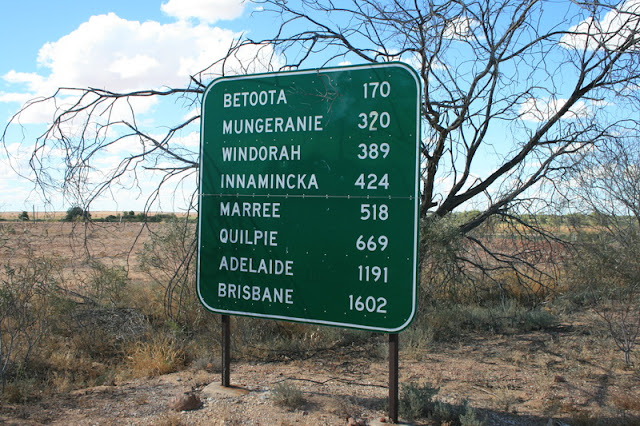
Hope you enjoyed your abbreviated tour of Australia! I've been here nearly six months now and still have a lot to say about the country. But what I'd like to know is what you all want to read/hear about. Just comment on Facebook if you'd like, and I'll try my best to answer your questions or entertain you at the very least!

Thursday, March 3, 2016

A Piano Recital

So this video was meant to be published on my blog two days ago, but some technical difficulties prevented it from happening. Anyway, disclaimer over. Enjoy!


This is a wombat sleeping in his water tank at a wildlife reserve. I feel the need to add pictures of animals in most of my blogs since there are SO MANY animals in this country that don't even remotely resemble what I've experienced. And wombats are the coolest.

Sunday, February 14, 2016

"I don't like spiders and snakes, but that ain't what it takes to love me."

If you've ever read about Australia, looked at pictures, or clicked the occasional Buzz Feed or Facebook news feed about the country, you know that it's fraught with danger. Spiders. Snakes. Freshwater crocodiles the size of Sedans.

And Australians, nonchalant and even-keel as usual, take it in stride: "Oh, that spider? Yeah, it's pretty deadly, but it won't bother you if you don't bother it. I'll just scoot it outside here, away from your bowl of cheerios." Now, to the credit of all Australians that have scoffed at my squeamishness around spiders only slightly smaller than my face, I have not been poisoned or even chased by a single arachnid. That's not to say I haven't thought spiders and snakes were chasing me, but hey, running away is a pretty solid kind of self-preservation.

So here are some pictures of the creatures I've encountered. Some are pictures that either Jordan or I took with our iPhones. Which means that we (usually Jordan) have been uncomfortably close to them.

I have no idea what this little guy to the left is called, but he kind of looks like he should be playing guitar for Kiss.

This is Margaret. She weighs over 800 pounds and enjoys ominous swims in the river.

To the left is an Orb Weaver, very harmless, shockingly large at times, and handy at building 10-foot webs in a matter of minutes.
This is the big Kahuna, the Shaq to all the other spiders' Pee-Wee Herman: the Huntsman spider. He was hanging out on the wall of my bedroom, looking for all the world like he wanted to eat me for breakfast. Below is a comparison picture--I'd say the one on my wall was a similar size, maybe a bit larger. Now, this spider isn't technically poisonous, but his scariness factor is through the roof.


I saw this taipan in the zoo in Brisbane; I'm sure I've already blogged about it. Although it isn't the most poisonous snake in Australia, it is incredibly aggressive and likes to chase people. No kidding.
A black snake (very original name) on the road outside of Crookwell, NSW. Sorry I cut off the tail; he was making me nervous. Very poisonous, but not very aggressive.

Wait for another original name...the brown snake! Australian naming prowess is unequaled. I nearly stepped on one of these while hiking in the Warrumbungles. Aggressive and too large for comfort, this is the most poisonous snake in Australia. So needless to say, I was shaken up, shying at every lizard and insect rustling in the leaves for the rest of the day. (Google images)


And this? This is a kangaroo scratching her belly. I thought I'd leave you with something less creepy.

Friday, January 22, 2016

Moving Along...

My stint as a cotton farmer is up. From October 7 to January 8, I planted cotton, irrigated with siphons, threw siphons, offset disced (weeks of this), hoed weeds, drove a fuel truck, and watched the cotton plants I planted grow. After making a small dent in Australian agriculture, providing a bit of fabric for the world's blue jeans and polo shirts, I'm moving along, heading east, then south. Let the adventure continue:)

The first adventure on the docket (already accomplished) was the Green Gully. Jordan and I, after weeks of anticipation, having bought the passes sometime in early December, wound our way into Oxley Wild Rivers National Park, towards this gully, marginally aware of what it held for us. He had been idly looking through hiking and backpacking opportunities in our area when he came across it; the gully sold itself well: huts to stay in each night, beautiful hikes through dry rain forest and a deep, solitary canyon. On the 11th, a Sunday, we drove our Commodore into the park and stayed that night in Cedar Creek cabin, a spacious accommodation with several bunk beds, a shower (believe me, quite a luxury), and a deck overlooking the green, wild expanse of the park.

The first day was the easy hike, a ridge walk mostly that plunged us 17.5 kilometers (10.8 miles) into Oxley Wild Rivers. That first hike, starting at 7:00 a.m., ending at 1:00, took us only six hours, and we were feeling pretty good about ourselves. Although our packs were at their heaviest (we carried all of our food and over a gallon of water in), we rocketed through that part of the expedition in no time. The first hut, known as the Bird's Nest was basic: tin walls and roof, wooden beams, some sketchy cooking supplies inside with a little gas-burner stove, army cots for sleeping. But we loved it. We felt adventurous and had a grand time napping outside on our cots, until we were run inside by a torrential downpour, and playing in the creek.

The second day took us "off track", and we wended our way along a ridge, picking out the faint trail left by previous hikers. All was well and we were feeling strong until we started the stark down-hill plunge, which dropped over 1,000 feet into the Green Gully bottom. Much to my chagrin, my right knee started acting up about 1/3 of the way down this ridiculously steep hill, and it only grew worse as we descended. By the bottom, I was hobbling along like an old crone, and the 4 km.-to-the-next-hut sign at the bottom of that evil hill nearly burst into flames with the power of my anger towards it. But I did manage to gimp my way to Green Gully Hut, awash with relief that I had to go no further for that day.

The next day I floundered through a creek for about six hours, and though my knee kept popping and making ungodly, awful grindy noises, I had a great time. We played trail games, fell over slippery rocks, went swimming in the most beautiful, clear pool surrounded by towering shelves of rock on each side, and managed to see a brush-tailed rock wallaby, an endangered species that inhabits the park. I was physically miserable but in comparatively good spirits by the time we reached Colwell's Hut after 8 hours of frustration with my knee and the creek, which I threatened with a boiling death each time I fell in it.

That night, we slept outside under an awning of sorts, and the next day we climbed out of the gully, reliving the second day but in the opposite direction. I thought I was moving slowly, my knee still hurt pretty badly and my left leg was sick and tired of taking all the weight, but we managed the uphill, 17.8-kilometer hike in about 5 hours. Overall, we hiked 65 kilometers, or 40 miles, and had a grueling good time.


Saturday, January 2, 2016

Do you speak the language?


Ebor Falls, New South Wales

Rosellas
One seriously sleepy koala.


I’ve been thinking (as I bump along on a GPS-guided tractor) about various blog posts that might be of interest and amusing for those reading this blog. And I came up with the obvious. It has been floating in the air around me since I arrived in this country, but I haven’t had the sense to comment on it.

English is the official language of Australia. But the language Australians speak is certainly Australian English. Let me demonstrate. This is a likely conversation:

Me: “What time is it?”

Wayne: “About smoko.”

Me: “Where should we have it?”

Wayne: “I reckon on the back of the ute.”

Me: “Let me see what you have in that esky of yours.”

Wayne: “Quit your sticky beaking.”

Translation:

Me: “What time is it?”

Wayne: “About 10:00 AM tea time.”

Me: “Where should we have it?”

Wayne: “I reckon on the back of the pickup.”

Me: “Let me see what you have in that cooler of yours.”

Wayne: “Quit looking in my stuff.”

This is a small example of Australian English. I’ve been confused, I’ve been peered at like I might be a bit slow, and I’ve been laughed at, but I think I’ve finally earned the right to write about this version of the language I claim to know so well (English teacher pride).

So for your edification and entertainment, here is a list of the words and phrases I’ve learned. Some of them are just common phrases used that I find to be hilarious coming out of grown men’s mouths. And some of them are products of the Australian impulse to shorten every word that can conceivably be shortened.


Tea: 10:00 tea, lunch, dinner (basically anything that isn’t breakfast)

Smoko: morning tea

Ute: utility vehicle, pickup

Esky: cooler

Fair dinkum: I’m serious! For real!

Rego: registration

Macko's: McDonald's

Sticky beaking: snooping

It’s no drama: It’s not a big deal.

Bikky: biscuit

Biscuit: cookie

Chip: French fry
Lollies: candy of any kind.

Paddock: pasture
Lah: short for "galah", a very simple-minded (but beautiful) bird; this word is generally directed towards a person acting stupidly.
Bogan: redneck

My word: exaggerator that emphasizes the goodness, largeness, impressiveness, etc. of something. Ex: “That was the best bikky I’ve had in a fortnight. My word!” (they also use fortnight—apparently one week isn’t an adequate enough measurement of time).

Renovation: reno (as in “home reno”)

This next part deviates a bit from conversational Australian English into the names of places in Australia. You’ll find when travelling in this country that there is a distinct line between the British influence and the Aboriginal influence. Australians are like anyone else; they’re of their country, just a much a part of it as it is a part of them. So I’d imagine they grow tired of people choosing to only comment on the “British influence” or “Aboriginal influence” when all of this melds together to create a uniquely “Australian influence”. They love their country and their land, and for this reason, they name their farms and ranches with what I can comfortably called pride and affection. These are the names included in the place where I’m working:

Kilmarnock—this is the home place and this is where I live.

Brigadoon, Nandewar, Calandar, Milchengowrie, Palara, Merrybungle (I know, right?!), Woodgrain

These are the names (and Australian modifications) of the surrounding towns:

Boggabri (Boggy), Gunnedah (Gunny), Narribri (…Narribri), Coonabarabran (Coona), Tamworth, Brisbane (Brissy, as we already know), Baan Baa, Wee Waa


There are hundreds of small towns in New South Wales and thousands of towns across this expansive country (my word!) that sound like they’ve come out of some ancient fairy tale. And there are towns like Townsville and Tamworth that reflect the culture of the colonizers.  Now I’m going to continue my string of days off due to rain and rain and rain. I think the Namoi River is going to flood. Here is a video:

Monday, December 21, 2015

A Salute


We never seem to think about the impact people have on our lives until we’re impacted by their death. Two days ago, a woman who is present in most of my elementary, junior high, and high school memories passed away unexpectedly, and I was stunned and suddenly aware of how much of a constant she had been for most of my life. So this one is for Mrs. Rogers.

I’m not going to pretend that I was Mrs. Rogers’ best student because I wasn’t. And I’m not going to pretend that I didn’t give her grief because I did. I spent many awkward moments at the other end of her sharp glance, and many more moments struggling between alto and soprano in choir class (I still haven’t figured it out). But I can say with confidence that Mrs. Rogers sparked something in me; I don’t feel like I was gifted with musical talent as others have been, but she managed to make me a trombone player, of all things, and a reasonably good one at that.

She also managed to stick with me, and after the ill-fitting, post-graduation tension students feel around their teachers (most often their strictest and best teachers), I began to look forward to happening upon her in the Winifred Grocery or alongside the road for a chat. She was happy to see me, happy to hear about my life, and never reproached me for the time she sent me to the office for talking back too much, or all the times she had to stop the entire band practice to tell Casey and I to shut up (if any of my students are reading this, please don’t judge me too harshly).

I don’t know what the Winifred High School halls will sound like without the constant metronome tap of her rings on the piano top or “Holy Toledo!” echoing in the students’ ears. She has been a building block of our school and our community, and she deserves the highest respect for the years of passion and time she put into WHS.   

Wednesday, November 11, 2015

The Wanderer

Most people know that wandering through the desert often leads to insanity. The wanderer's mind cracks, leaving a gap between illusion and reality: "Is that water?! No, it's a rock."  "That's most certainly water! Nope, a lizard that looks like a rock." 

Planting cotton, I've found, is similar. It's like wandering through a GPS-mapped desert. I've been on this feild for two full days, 26 hours, and I'm still not done. I think I'm about to crack, so you can read this as a farewell-to-Sarah's-sanity post. 

Unlike the poor desert wanderer, I'm not looking for water. I have my water jug (he's a friendly sort, very chatty).

Instead, I'm looking for the end of the field. And trees. And signs in the trees (bye-bye, sanity). 


This specimen, for example, is undoubtedly a sign meaning that the end is near.

That's all.

Tuesday, November 10, 2015

I'm a Farmer!

I have a job! Many jobs, actually, most of which include driving green tractors—oh yes, John Deere gets a nod from Australia—and struggling with irrigation and its ups, downs, flows, and stops. The Watsons hired me while I was still in Montana, kind of a wing and a prayer I suppose, thanks mainly to Laura Boyce. I can’t thank her enough. I am now living in one of their cottages and enjoying their kindness and hospitality and surplus of farm work, some familiar, some entirely new to me. Along with lateral irrigation, the Watson farm uses mostly siphon irrigation, which falls into the category of work that is unfamiliar to me. Well, it’s at least marginally familiar now, but I did struggle and elicit quite a lot of laughter from my trainer, Cliff, in the early period of my irrigation expertise.

I now can start many siphons in a much shorter time period. The basic formula is water in an irrigation ditch, a black plastic tube about 6 feet long, and an arching motion that includes creating suction with one hand and plunging the tube into the ditch and back out with the other hand until it is full and ready to be thrown down. The full pipe is thrown into a rotor buck, an earthen, wide ditch that is dug by an implement on the back of a (green) tractor, on the other side of the irrigation ditch. So the pipe is draped across the field side of the irrigation ditch and siphons water until it is lifted, kicked, flipped into inertia. It’s definitely an acquired kind of enjoyment.

The idea is to direct the water between two cotton rows; the water runs down every other ditch between the cotton rows and is “subbed up” in the remaining rows from exposure to water for 12 to however-many hours it needs to run through the rows. Cotton came up first on the field I irrigated with much assistance from Cliff and my boss, Andrew Watson. Here’s photographic evidence for your records!

Other than actual irrigation, I’ve spent hours with Wayne, another of my coworkers, throwing siphons into the ditches, aiming for the rotor bucks on the other side of the irrigation ditch. Roads skirt every field, every irrigation ditch, and we drive along them pulling the pipe trailer, throwing siphons from the back. The result: I have the shoulders of a football player.


Every morning and evening that I went to my field, W9, I was berated by cockatoos and galahs. If ever I’ve been happy with a thorough butt-chewing, this is the time. To think that I can wake up in the morning, say hello to the inevitable yard kangaroos that hop away with a reproachful wave of their tails, listen to the countless songs, chirpings, and crowings of the hordes and hordes of birds, and weave my way through stands of gum and eucalyptus trees, leaves me with a pleasant feeling and a solid justification for my choice of country to live in for a year. 

I'm sorry there are no pictures. The internet is deplorable, and it takes over an hour to upload two or three pictures. When I find better internet, I'll add pictures; I promise!

Wednesday, October 21, 2015

Brissy, baby!

 I should have written this blog days ago. For that reason, there is too much to tell in one blog, so I’ll limit this one to telling you about my time in Brisbane (Brissy, as the locals endearingly call it) and a bit about what I’m doing now. On either side of this are pictures I took on my first and second days in the city.

Emma and I arrived in Brissy ( pronounced like fizzy, not prissy) on the 29th of September and proceeded to the apartment of a person I had met in Airlie Beach. The apartment was right on the South Bank of Brisbane, arguably the prettiest part of the city, and the view at night was phenomenal. The first night we met the other Americans (yeah!) staying there, a traveling musical group from Nashville, Tennessee, of all places. The singer’s name is Anysia Lane—check her out; her music is worth a listen (http://www.anysialane.com/#!media/c17bp). On a side note, it was unusual for me to meet with many Americans while I was backpacking. Once again, Germans everywhere.

That night I slept in a swag on the floor. A swag is the camping Australian’s pride and joy and is basically a tricked out sleeping bag that can be gusseted into one-person tent. I’m sure these exist in America as well, but I’m not so sure they call them “swags”.

The Brisbane River runs through the middle of the city, and locals often catch river ferries to and from work. I loved this idea, so we spent most of the next morning riding the ferry, finding cheap sushi spots for snacks, and walking around the rest of downtown Brisbane. Across the river and up from South Bank lies the downtown proper, or where the big businesses in their too-big buildings loom, blocking (or creating, depending on your view of the world) the skyline.
                 Brisbane Wheel


Satisfied with our exploration of the city, Emma and I decided to visit the Steve Irwin Zoo on the 31st. Dad and I used to watch Steve Irwin's show "The Crocodile Hunter" and laugh and call a calf or a garter snake a “ripper” and call each other “mate”. Mr. Irwin, if you aren’t familiar, is mainly known for his exorbitant amounts of energy, walk-in-the-park attitude towards handling the world’s deadliest animals, and in Australia I’ve noticed, his respect and care for native wildlife. If you don’t remember, here is a video refresher of the glory that is Steve Irwin: https://www.youtube.com/watch?v=mlDXZywedvc

I saw the tigers he introduces in the video, but they are now full grown. These pictures are of Kaitlyn, a 7-year-old female Sumatran Tiger. Below is one seriously sleepy koala. Sloth is a forgivable vice in koalas; they are adorable no matter how little they move.

The next morning, I took Emma to the airport at 3:00 AM. I’ll tell you now, navigating a city the size of Brisbane on the left-hand side of the road is much easier when there is no traffic. She was off to Sydney for a few days and then catching another flight to Perth to meet with her boyfriend, so I was left to wander Brisbane solo. 

Being centered in the South Bank, I had easy access to the Brisbane Cultural Center, which includes the state library, the Queensland Art Gallery and Museum of Modern Art, the Queensland Museum, and the Queensland Performing Arts Centre. I visited all but the state library (regrettably, but I’ll return to Brisbane in November). The art gallery and Museum of Modern Art were beyond comparison; they held everything from Aboriginal art to Impressionism. If you haven’t picked up on it through my blog, I’ll just say that Brisbane is a pleasant and enjoyable city. I would recommend visiting it if you just happen to be passing through Aus.  


This was my last full day in Brisbane; the next day I left for Tamworth on the Greyhound, bound for cotton farming and irrigation. This is where I’ll end. Blogs should be fairly short to keep the attention of the Information Age cohort, right? I’ll continue with the next blog in a couple days. G’day mates.

Saturday, September 26, 2015

Kangaroos!


This is a mama and her two joeys in the middle of a small town called Boonooroo on the Queensland coast. We had driven there to get a look at Fraser Island from across the channel, and we had the good luck of seeing some town kangaroos.

I was happy to see them alive; up to this point, I had the impression that kangaroos were strictly road kill in Australia. 

Wednesday, September 23, 2015

Snorkeling:) :) :)

If you ever find yourself with the opportunity to go snorkeling on the Great Barrier Reef, or any other reef for that matter, DO IT. What an incredible experience. We began the day with an Australian that looks a lot like Lucas Black... :) Before booking this trip, I met an Austrian woman named Emma on the bus ride to Daintree Forest. She is also a teacher, has a strong, compelling personality, and has turned out to be a great friend on this adventure. So we booked our snorkeling trip together--my first snorkel ever, let alone on the Great Barrier Reef, and one of several for Emma.

  Lucas Black

Anyway, Mr. Black (I never caught his name) told us a few things about the reef, drove too fast over the rutty roads, then dropped us off at the Ocean Safari center where we were given wet suits (wetties in Australian--they shorten everything that can be shortened), and shown a picture of Mackay Reef, which we were to visit that day. Cam, our tour guide, explained the benefits of that reef, i.e. they were the only tour that went there, so it is very exclusive, basically undamaged, and the creatures aren't afraid of people. This is Mackay Reef:


It looks a bit different now but basically the same. Instead of a long, linear "island" there is now a single island or cay that is round and emerges above the water about three or four feet; the sand is a product of coral that has been ground to a fine, white grain. 

The boat ride out was wild. I opted to ride on the side of the boat, which meant I was clinging to a rope with one hand and a cloth handle with the other. At times it felt like we were hitting the ocean floor when we hit the trough of a wave, but it was incredibly fun and adrenaline inducing. The skipper (my Austrian friend Emma used skipper instead of captain) drove like a man possessed, played chicken with the waves, and blared music for the 30 minutes it took to reach the reef. All this resulted in a tiny bit a fear and a large bit of excitement. This is an image of the boat we took to the reef:

When we finally got out there, Cain, our skipper, gave us a rundown on snorkeling safety and hand signals that indicate certain states of being: one hand held to top of your head, your arm in a loop, means you're okay, an inexplicable gesture with your hands means turtle, hands held like fins on top of your head means shark, and waving your arms and screaming "help" means, well, "HELP!!" 

After all this, I was pretty apprehensive, being out so far into the Pacific, out of sight of land. I'm not a strong swimmer, I'm from a land-locked state, and the water was so blue and so deep. But Cain handed me a pool noodle, told me I'd be fine, and sent me over the edge. I can't put into words the feeling of plunging into the absolute unknown. I've done it before when I bungee jumped in South Africa, but the ocean was somehow scarier, more unknown. At least I could see the ground rushing towards me when I bungee jumped. But the ocean is murky at certain depths and even the smallest imagination can conjure terrifying monsters from that water. 

But Emma was right ahead of me, and seeing her put on her snorkel, I did the same. What followed was like magic. I could see, and what I saw was fascinating. The best way I can think to describe it is like a community. The fish had their areas, their pockets between the green, blue, orange, pink coral. They lived in symbiosis, trimming the coral, keeping it clean, while cleaning each other and coexisting in this incredible coral reef that exists on a plane somewhere between land and water. It was at first strange to hear myself breathing, like Darth Vader had taken up residence in my head. But I became comfortable much more quickly than I would have expected and began to notice more and more. I saw parrot fish, blue starfish, giant clams, and a sting ray.

Giant clam and blue starfish.

 But best of all, I saw five sea turtles, their backs like desert mosaics, their eyes large and shining. They scratched their bellies on the coral, they drifted around, looking bored, then interested, then bored again. We didn't matter to them; they were oblivious of us as we followed them around like a school of fish. The only problem I found with the turtles was I could not keep from smiling, which flooded my mouth with ocean water. A rookie mistake, I'm sure, but there was no helping it.


After the initial snorkel, we went to another, deeper spot on the same reef, and this is where we saw the biggest of the giant clams. In one spot, Cam told us there were 32 clams, the largest measuring 3-4 feet across. Their colors are brilliant: blue, pink, white, purple, and varying shades of many others.

After two hours on Mackay Reef, we went back to Cape Tribulation. I was exhausted and cold, but happier and more satisfied with snorkeling than I had expected to be. This final picture is of me and the crew that were on the reef that day, September 15. I hope you enjoyed this blog. Feel free to comment at the bottom and ask questions! I'm sorry I haven't blogged for awhile; the last two places I've stayed have charged way too much for wifi so I stubbornly refused to pay. But keep in mind, although I try to be consistent, sometimes it is difficult. I will do my best!